

B4C Exporter: Essential Guide to Boron Carbide Supply and Quality Standards
2026-10-07
Boron carbide (B4C) sits at the intersection of extreme hardness and lightweight performance—yet finding a supplier who truly understands export-grade quality remains a persistent headache for engineers and procurement teams. In this essential guide, we unpack the supply chain realities, purity benchmarks, and inspection protocols that separate reliable B4C from costly disappointments. Whether you're sourcing for ballistic armor, nuclear shielding, or abrasive applications, HUAYI TECH brings clarity to the standards that matter.
Why Boron Carbide Purity Claims Often Mislead Buyers
Many buyers assume a 99% purity specification for boron carbide means nearly the entire powder is stoichiometric B4C. In practice, that number usually reflects only the combined boron plus carbon content after subtracting oxygen, nitrogen, and metallic impurities. Free elemental boron, excess carbon, and boron oxide can all exist within that 99% figure. As a result, two powders with identical purity certificates may behave very differently in sintering, hot pressing, or armor applications.
Another source of confusion is the analytical method. Some suppliers rely on X-ray fluorescence for metallic impurities and then infer boron carbide content by difference. This can miss light elements or amorphous phases. Other labs use titration or fusion gas analysis, which have their own blind spots. Without a phase analysis such as X-ray diffraction, it is hard to know whether the material is truly single-phase B4C or a mixture that merely passes an elemental assay.
A third issue is particle-level contamination. Surface oxidation, residual milling media, and adsorbed moisture are often excluded from the reported purity because they are not part of the crystal lattice. Yet they can reduce sintered density, lower hardness, or introduce porosity. Buyers should ask for total oxygen, free carbon, free boron, and a diffraction pattern, not just a single purity percentage.
The Real Cost Drivers Behind B4C Export Quotes
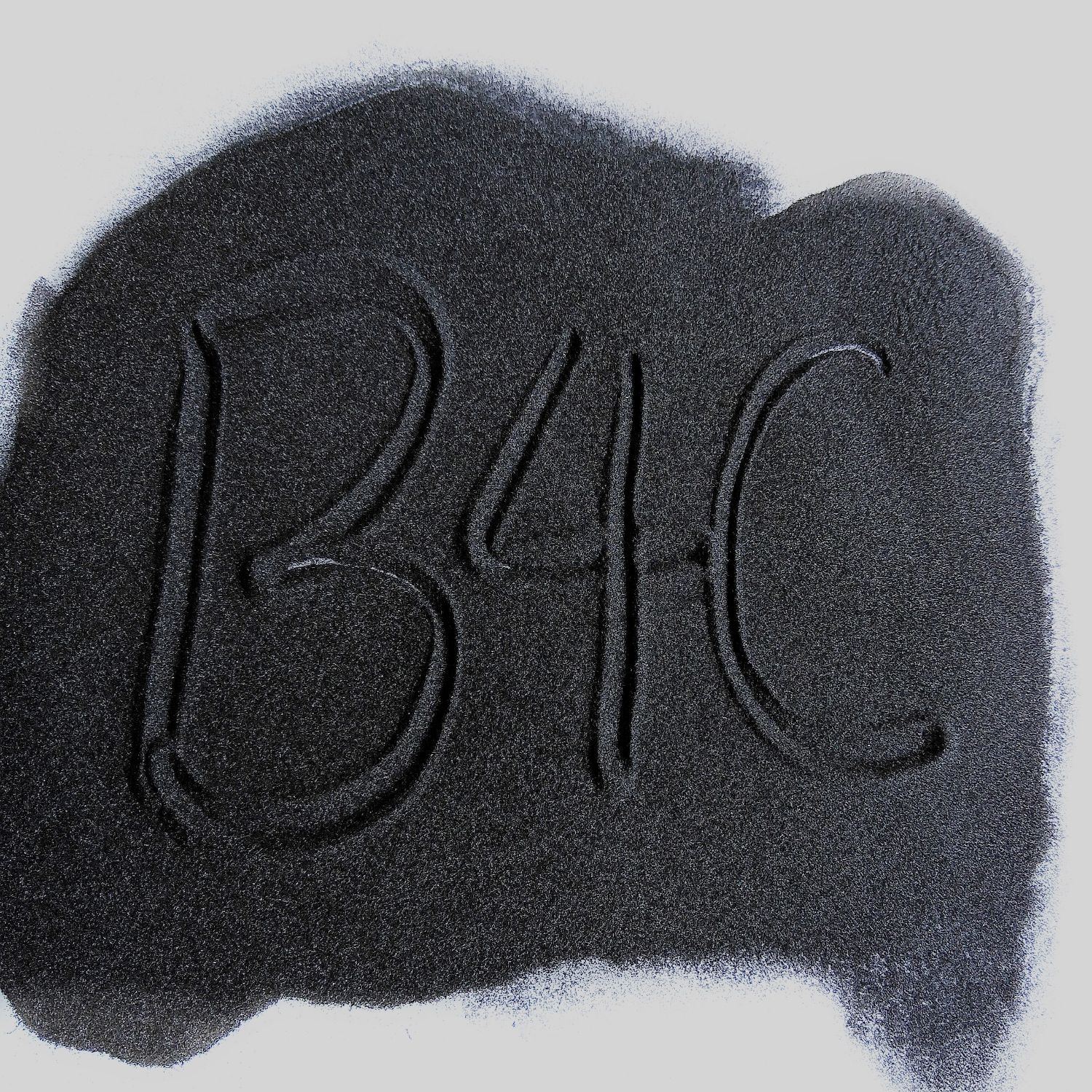
Raw material grade is rarely discussed openly, but it often sets the floor for any B4C quotation. Higher boron carbide purity—above 99%—demands additional chemical processing and tighter contamination control, which cuts usable output per batch. Likewise, requested particle size distribution plays an outsized role: producing a narrow micron range or ultrafine powder requires repeated milling and classification, and each pass reduces yield while consuming more energy and abrasion-resistant liners.
Energy input and furnace time are equally decisive. B4C is typically smelted in electric arc furnaces, so local electricity tariffs and electrode consumption directly move the cost baseline. When buyers specify sintered or hot-pressed parts instead of raw grit, process time lengthens, tooling wear accelerates, and rejection rates climb if density or hardness targets are strict—these variables rarely appear on a quote but shape the final number.
Outbound logistics add another layer that many overlook. Export-grade packaging must prevent moisture pickup and surface damage during long transit, and handling boron carbide products can trigger dangerous goods paperwork depending on the destination. Customs clearance, port storage, and destination-specific certifications—such as radiation or safety testing—are not fixed overhead; they fluctuate with the trade lane and delivery terms, and they frequently account for a larger share of the total than the material itself.
How to Read a B4C Certificate of Analysis Like a Trader
A trader skips the lab jargon and goes straight to the numbers that move price: total boron plus carbon purity against the contracted spec, contaminant ceilings for iron, silicon, calcium, and magnesium, and boron isotopic ratio if the lot is headed to nuclear or aerospace customers. A half-point slide in B4C content or an unexpected spike in silica can push a load out of spec and wipe out the margin. Always read the reported values against the purchase agreement, not the polished product brochure.
Particle size data is where most disputes start. D10, D50, D90, and specific surface area tell you whether the powder will pack, flow, and sinter the way the downstream buyer expects. If the D50 looks too fine but the span is wide, request a re-test before accepting delivery; blending off-spec material comes out of your own pocket, not the supplier's.
Finally, ignore the big "PASS" stamp. Pull the raw numbers, note the test standard used, and match the lot number to the bill of lading. Check that the certificate carries a clear date and an accredited lab signature. A certificate without traceability is just marketing paper. Traders treat missing details as a reason to negotiate, not automatically reject the load.
Boron Carbide Grades That Actually Survive Ballistic Testing
Not every boron carbide plate on the market can take a real hit. The difference comes down to how the powder is processed and how tightly the final tile is sintered. Look for grades with a fine, uniform grain structure and a true hot-pressed density above 2.48 g/cm³. Those are the ones that hold together when a high-velocity projectile strikes, rather than spalling or cracking along micro-voids left over from sloppy pressing.
Some suppliers quietly blend lower-cost boron carbide with silicon carbide or even alumina to cut corners. These hybrid grades might pass a visual check but fail under multi-hit scenarios because the second impact finds a weakened zone. If a spec sheet only lists "B4C content ≥ 90%" without naming the sintering method or the actual fracture toughness, treat that as a red flag. Surviving ballistic testing is not about a single number; it's about consistent performance across the entire tile surface.
Another overlooked factor is edge retention. Plates that survive center-mass shots can still shatter when struck near a corner because the edge was machined too aggressively, leaving subsurface damage. Ask for tiles that are waterjet-cut and then edge-ground with a fine diamond wheel, not just rough-trimmed. The best grades come from manufacturers who test every production lot with a standardized V50 or multi-hit protocol, not just a sample from the first batch.
Common Substitutions in the B4C Supply Chain (And How to Spot Them)
One of the most frequent swaps in the boron carbide trade is blending silicon carbide into B4C powders meant for abrasives and lapping compounds. SiC costs a fraction of the price and looks close enough to pass a quick visual check. But the density gap is your first red flag: genuine B4C sits around 2.52 g/cm³, while SiC is closer to 3.2 g/cm³. Pull a random sample and run a pycnometer test—if the number climbs above 2.7, you’re not handling pure B4C. Also examine the fracture surface under magnification. B4C breaks with a smooth, conchoidal, glassy look, whereas SiC shows a more granular, sugary texture.
Another substitution pattern involves passing off low-grade or reclaimed B4C as virgin nuclear-grade material. This matters enormously for control rods and neutron shielding. The tell-tale indicators are free carbon and boron oxide content. Run a wet titration for B₂O₃ and a combustion analysis for free C. If those values creep above 0.5% and 2% respectively, you’re not looking at high-purity powder. X-ray diffraction can also catch extra phases like graphite or B₈C that don’t belong in a tight B4C pattern. Keep a reference diffractogram from a trusted lot and compare peak shoulders—extra bumps near 26° and 22° 2θ often give away the adulterant.
In sintered or hot-pressed parts, some suppliers substitute reaction-bonded silicon carbide and then apply a dark coating to hide the switch. Hardness testing won’t help because both materials are extremely hard. Instead, check the thermal neutron absorption cross-section if you have access to a neutron source, or use energy-dispersive X-ray spectroscopy to look for silicon. Any silicon reading above trace level means the part has been cut with SiC. A simpler route is acid digestion: B4C resists hydrofluoric acid but slowly dissolves in a hot sulfuric/nitric mix, while SiC behaves in the opposite way—quickly attacked by HF, almost untouched by the acid mixture. Pair that with a density check and the substitution usually falls apart.
What Changes in Quality Standards Mean for Your Next B4C Order
When your next boron carbide purchase lands on the desk, the first thing to check is whether the supplier’s certificate now lists the updated impurity caps—especially for free carbon and metallic traces. Tighter limits here do not just shift paperwork; they can alter how the powder flows, packs, and eventually densifies in your process.
Particle size reporting has also moved toward laser diffraction with stricter reproducibility windows. If you have been working from older sieve data, expect your incoming lots to feel slightly finer on average even when the nominal grade stays the same. That subtle shift can change green strength and surface finish more than you might anticipate.
Finally, batch-level traceability requirements are becoming the norm rather than the exception. Ask for the full heat treatment curve and milling log, not just a one-line compliance statement. The orders that cause trouble are rarely the ones that fail a spec outright—they are the ones that pass on paper but behave differently in your kiln.
FAQ
Commercial grades usually range from 90% to 99.5% B4C, with nuclear and armor applications often requiring higher purity and tighter control of trace elements like iron and silicon.
FEPA F-grades and JIS grit sizes both classify particle size distribution, but FEPA uses a coarser F4 to F220 scale while JIS uses #240 to #8000 for finer lapping and polishing. Exporters need to specify which standard applies to a shipment.
Chemical analysis via XRF or ICP, particle size distribution by laser diffraction or sieving, bulk density, and sometimes specific surface area. For nuclear-grade material, neutron absorption cross-section may also be verified.
Excess moisture can cause agglomeration and weight discrepancies, and may lead to caking during transit. Exporters typically dry powder to below 0.5% moisture and use sealed, lined drums or bags.
Because B4C is used in armor and nuclear applications, some countries impose export controls or end-use restrictions. Exporters must screen buyers and may need licenses, especially for high-purity or military-spec material.
Hot-pressed parts usually achieve higher density and hardness with lower porosity, making them preferred for ballistic tiles. Sintered parts are cheaper but may require post-processing to meet tight dimensional specs.
Each batch should be assigned a lot number tied to raw material sources, production date, test reports, and packaging details. This helps resolve quality disputes and supports compliance audits.
Using polyethylene liners inside steel or fiber drums, double-bagging for fine powders, and palletizing with moisture barriers. For high-purity grades, cleanroom packaging may be required.
Conclusion
Boron carbide purity claims mislead because a data sheet may report total boron content, not the actual B4C phase, leaving out oxygen, free carbon, and metallic contaminants that quietly reduce sintered density or ballistic performance. Export quotes shift less with that headline number than with particle size distribution, whether the material is ready-to-press or requires further milling, and the consistency of the production lot. Learning to read a certificate of analysis like a trader means focusing on the B:C atomic ratio, the gap between total carbon and free carbon, and trace levels of iron, silicon, or aluminum—not just the 99% figure on the front page. A repeatable, tight lot history beats a single impressive test result.
For armor applications, only boron carbide grades with dense, fine-grained microstructures and carefully controlled sintering additives survive ballistic testing; coarse, porous, or poorly sintered material shatters under impact. Substitution is a persistent issue in the supply chain—boron suboxide, boron nitride, or SiC-blended powders can be passed off, but density, XRD, SEM, and microhardness checks expose them quickly. As standards like ASTM and ISO updates tighten tolerances for oxygen and grain size, your next order needs a fresh COA tied to the exact lot and a re-qualified supplier. Specify performance thresholds instead of vague purity: minimum density, maximum oxygen, precise particle distribution, and documented provenance.
Contact Us
Contact Person: Junting Leo
Email: [email protected]
Tel/WhatsApp: +86 18615009766
Website: https://www.huayimaterial-china.com/